
How to pack adventure toiletries without losing your mind
Why Your Adventure Trip Toiletries Guide Can Make or Break Your Journey
An adventure trip toiletries guide is something every explorer needs before heading into the backcountry — and getting it wrong means either a bag that weighs a ton or missing something critical on day three of a remote trail.
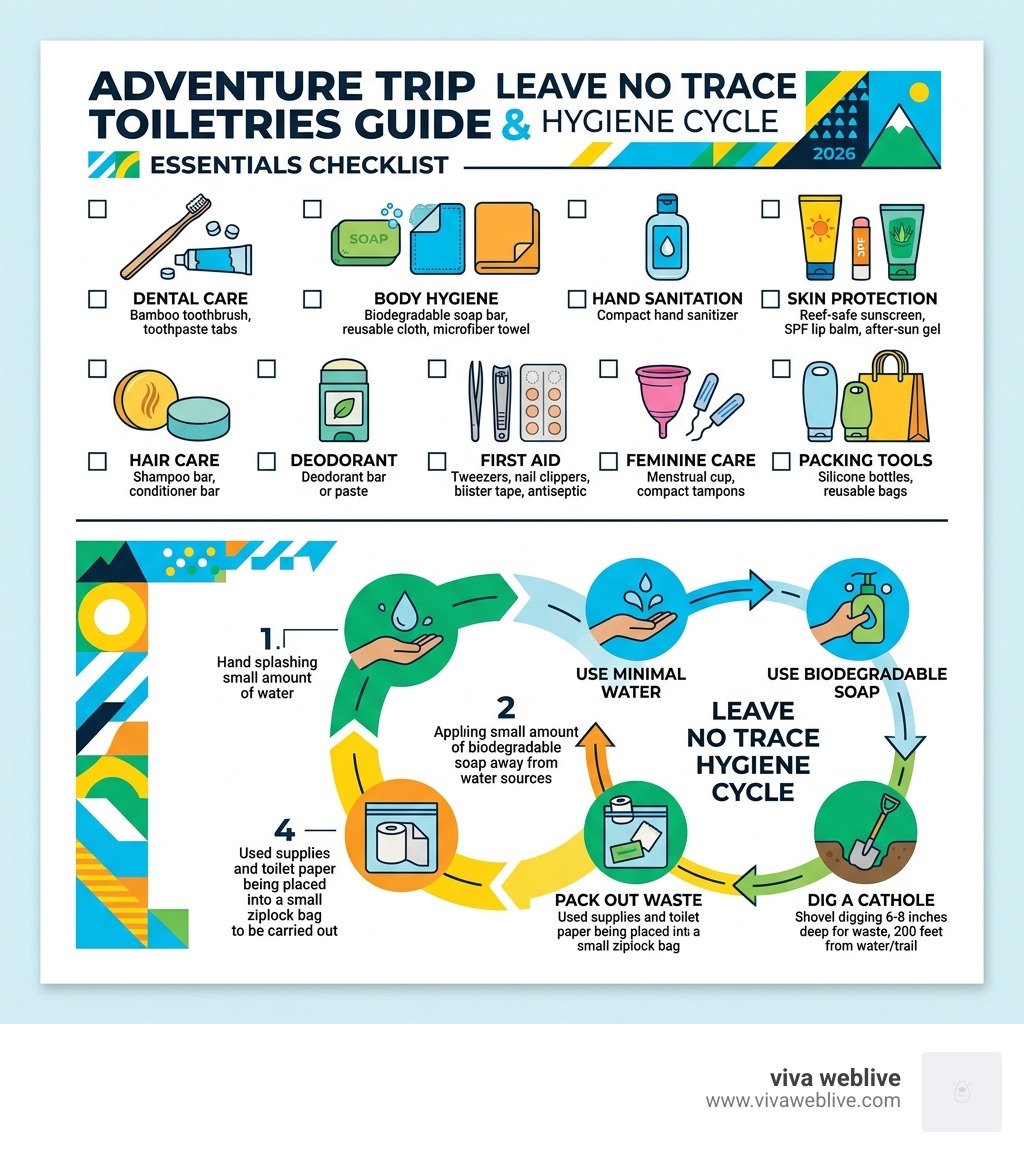
Here’s a quick overview of what to pack:
| Category | Essential Items |
|---|---|
| Dental care | Bamboo toothbrush, toothpaste tabs |
| Body hygiene | Biodegradable soap bar, wet wipes, microfiber towel |
| Hand sanitation | Hand sanitizer (travel size) |
| Skin protection | Reef-safe sunscreen, SPF lip balm, after-sun gel |
| Hair care | Shampoo bar, conditioner bar |
| Deodorant | Deodorant bar or paste |
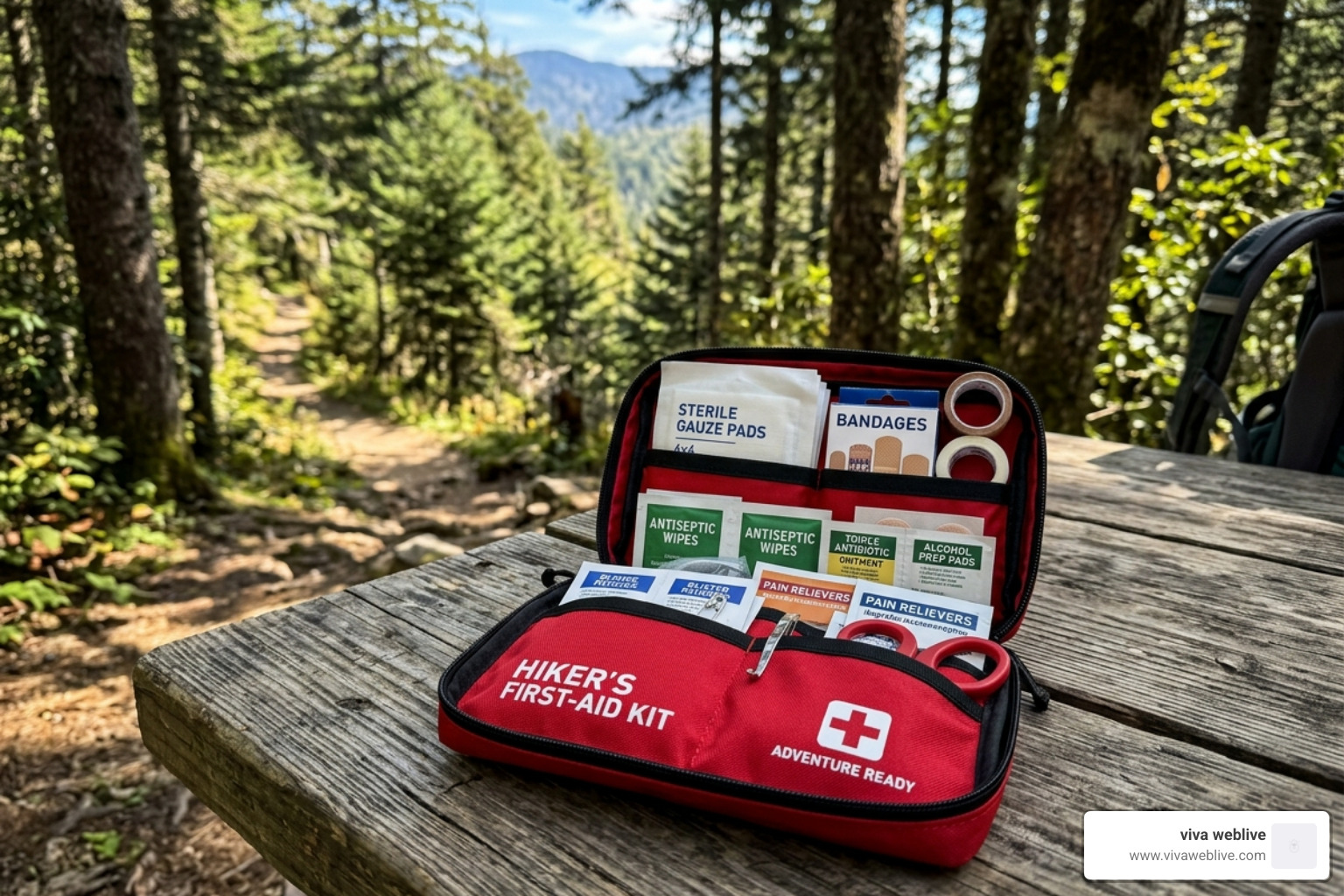
| First aid | Tweezers, nail clippers, blister tape, antiseptic |
| Feminine care | Menstrual cup or compact tampons |
| Packing tools | Quart-size zip bag, silicone travel bottles, ziplock bags |
Most travelers fall into one of two traps: they overpack and end up with a bag full of half-used bottles, or they underpack and spend day two of a wilderness trip without sunscreen or blister care.
The sweet spot is a compact, multi-use kit that keeps you clean, protects your skin, and leaves no trace behind.
Toiletry packing for adventure travel is uniquely tricky. You’re balancing the comfort needs of a vacation with the weight limits of backcountry minimalism. Do you bring your usual shampoo, or switch to a bar that doubles as body wash? Do you need deodorant on a cold mountain trail, or is it just dead weight?
This guide answers all of that — clearly and without fluff.
The Essential Adventure Trip Toiletries Guide for Every Explorer
When we talk about an adventure trip toiletries guide, we aren’t just talking about smelling good. In the wild, hygiene is a health and safety issue. Dirty hands lead to stomach bugs, and unclipped toenails lead to painful “black toe” on steep descents. As of April 2026, the trend in adventure travel has shifted heavily toward “fast and light” — meaning every gram in your wash bag must justify its existence.
Maintaining hygiene in remote areas requires a shift in mindset. You won’t have a steaming shower every morning. Instead, you’ll rely on “hot spots” cleaning and high-performance products that work with minimal water.
Must-Have Dental and Hygiene Items in Your Adventure Trip Toiletries Guide
Let’s start with the basics of staying fresh. Traditional plastic toothbrushes and heavy tubes of gel are out. Instead, we recommend:
- Bamboo Toothbrushes: They are lightweight and biodegradable. If you’re a true minimalist, you can even cut the handle in half to save space.
- Toothpaste Tabs: These are a game-changer. They are liquid-free (TSA loves this!), lightweight, and you can pack the exact number you need for your trip. No more half-empty tubes taking up space.
- Biodegradable Soap: Look for concentrated, multi-purpose options like Dr. Bronner’s. It can wash your body, your hair, and even your socks.
- Hand Sanitizer: Essential before every meal and after every bathroom break. In the backcountry, “trail spice” (dirt) is fine, but bacteria is not.
- Wet Wipes: Often called a “hiker shower.” Use half a wipe per day to freshen up key areas. Pro tip: re-wet them with a little water if they start to dry out.
- Microfiber Towel: These dry incredibly fast and pack down to the size of a deck of cards.
For women, managing a period on the trail can be daunting. We highly recommend a menstrual cup; it produces zero waste and lasts for years. If that’s not for you, o.b. tampons (without applicators) are the most space-efficient choice.
Skin Protection Essentials for Your Adventure Trip Toiletries Guide
The sun is stronger at high altitudes and more reflective near water or snow. Protecting your skin isn’t just about avoiding a burn; it’s about preventing exhaustion and infection.
- Reef-Safe Sunscreen: Many regions, including Hawaii and parts of the Caribbean, now ban sunscreens containing oxybenzone. Use non-nano zinc oxide formulas to protect both your skin and the coral reefs.
- SPF Lip Balm: Windburn and sun-chapped lips can make eating and drinking painful. Never leave home without an SPF 30+ balm.
- Insect Repellent: In deep jungles or marshy tundras, DEET or Picaridin is your best friend.
- After-Sun/Wind-Burn Gel: Look for aloe-based gels or even small tins of tallow to soothe skin that has been battered by the elements.
For the most up-to-date health advice before you fly, always check the CDC travel health recommendations to see if you need specific medical-grade ointments for your destination.
Sustainable Hygiene: Why Biodegradable Matters in 2026
In 2026, being a responsible traveler means more than just packing out your trash. It means being mindful of the chemicals we introduce to pristine water sources. Even if a soap is labeled “biodegradable,” it doesn’t mean you should use it directly in a stream.
The “Leave No Trace” gold standard is the 200-feet rule: always wash yourself, your dishes, and your clothes at least 200 feet (about 70 adult steps) away from any lake or river. This allows the soil to act as a natural filter, breaking down the soap before it reaches the water table.
The Nightly Minimalist Shower
You don’t need 20 gallons of water to feel human again. We use the “nightly water splash” routine:
- Carry a small bottle of water away from camp.
- Splash your face, underarms, and “undercarriage.”
- Use a tiny drop of biodegradable soap only if necessary.
- Dry off with your microfiber towel.
This simple routine boosts morale and prevents skin issues like chafing, which can end a trip faster than a broken ankle. As the EPA guidelines on water protection suggest, our collective impact on water sources is significant, especially in high-traffic adventure zones.
Space-Saving Hacks: Multi-Use and Liquid-Free Alternatives
The secret to a light pack is “multi-use.” If an item only does one thing, it’s a luxury. If it does three things, it’s an essential.
| Liquid Toiletry | Solid/Dry Alternative | Why It Wins |
|---|---|---|
| Shampoo Bottle | Shampoo Bar | Lasts 3+ months, zero leaks, no plastic. |
| Toothpaste Tube | Toothpaste Tablets | No mess, TSA-compliant, ultra-light. |
| Liquid Deodorant | Deodorant Paste/Chunk | Saves massive space, won’t melt in heat. |
| Sunscreen Lotion | Sunscreen Stick | Better for face/hands, won’t leak in bag. |
| Shaving Cream | Multi-purpose Soap | One less bottle to carry. |
Shampoo and conditioner bars are perhaps the best investment you can make. They bypass all airline liquid restrictions and won’t explode in your bag when you reach high altitudes. Similarly, soap leaves (wafer-thin sheets of soap) are perfect for day hikes where you just need to wash your hands once or twice.
For those with long hair, dry shampoo (in powder form, not aerosol) can extend the time between full washes, saving you precious water and time. For more tips on optimizing your kit, you can find more info about travel gear on our main site.
Mastering the Pack: Organization and TSA Compliance
Packing your adventure trip toiletries guide is an art form. If you’re flying to your destination with only a carry-on, you must respect the TSA 3-1-1 rule: all liquids, gels, and aerosols must be in 3.4-ounce (100ml) containers and fit into a single quart-sized clear bag.
Organization Strategies
- Silicone Bottles: If you must bring liquids, use high-quality silicone bottles. They are squeezable (so you get every drop) and far less likely to crack or leak under pressure than cheap plastic bottles.
- Hanging Toiletry Bags: These are brilliant for camping. You can hang them from a tree branch or a tent pole, keeping your essentials off the muddy ground and at eye level.
- Ziplock Bags: We always pack a few extra. They are perfect for containing a leaky bottle, storing used wet wipes, or acting as a “trash can” for used dental floss and feminine products.
- Labeling: Use a permanent marker to label everything, especially medications. If you’re using pill organizers, include a small note with the dosage instructions.
Common Packing Mistakes
- Bringing the “Just in Case” items: If you haven’t used that fancy face serum in six months, you won’t use it on a mountain.
- Forgetting Nail Clippers: A hangnail or a long toenail can become a medical issue on a trek. Clippers and tweezers (for splinters and ticks) are non-negotiable.
- Cotton Towels: They never dry, they get heavy when wet, and they eventually smell like a swamp. Stick to microfiber.

Frequently Asked Questions about Adventure Trip Toiletries
How do I maintain hygiene in remote areas with limited water access?
Focus on “strategic cleaning.” Use a small amount of water or a single wet wipe to clean the areas where you sweat most (underarms, groin, feet). Merino wool clothing also helps, as it is naturally odor-resistant and requires less frequent washing than synthetic fabrics.
What are the best multi-use toiletries that save space?
A high-quality biodegradable liquid soap is the king of multi-use. It works as body wash, shampoo, dish soap, and laundry detergent. Additionally, a small tin of petroleum jelly or a multi-purpose balm can serve as a moisturizer, lip balm, and even a barrier to prevent blisters.
Why should I choose biodegradable toiletries for adventure travel?
Traditional soaps contain phosphates and surfactants that can cause algae blooms in lakes and harm aquatic life. Biodegradable products are designed to break down naturally. However, they still need soil to biodegrade; never use them directly in a water source.
Conclusion
Packing for an adventure doesn’t have to be a headache. By focusing on multi-use items, switching to solid alternatives, and prioritizing environmental protection, you can build a kit that is both lightweight and highly effective.
At Viva WebLive, we believe that the right gear gives you the freedom to focus on what really matters: the experience. Whether you’re climbing Kilimanjaro or kayaking through a remote archipelago, your hygiene kit should be the last thing on your mind and the most reliable thing in your pack.
Ready to head out? Explore our adventure travel guides for more expert tips on how to Travel Smart, Gear Up, and Explore More. Safe travels!
