
One Bag to Rule Them All: Best Day Trip Backpack and Bag Guide
The Best Day Trip Backpacks of 2026: Find Your Perfect Pack
The best day trip backpack depends on your activity, load size, and fit — but here are the top picks for 2026:
| Rank | Pack | Capacity | Best For | Overall Score |
|---|---|---|---|---|
| 1 | REI Co-op Traverse 35 | 35L | Heavy loads, all-day comfort | 77/100 |
| 2 | Gregory Zulu 24 LT | 24L | Most comfortable overall | 76/100 |
| 3 | Osprey Sportlite 25 | 25L | Lightweight performance | 75/100 |
| 4 | REI Co-op Flash 22 | 22L | Budget-friendly, ultralight | 73/100 |
| 5 | Venture Pal 35L | 35L | Best weight-to-volume ratio | 71/100 |
Whether you’re heading out for a quick two-hour trail walk or a full day in the mountains, your daypack can make or break the experience.
A bad fit means sore shoulders. Too little space means leaving essentials behind. Too heavy a pack means you’re already exhausted before the trail gets hard.
The good news? There are excellent options at every price point — from ultralight packs under $60 to feature-rich carry systems designed for rough, technical terrain.
Finding the right pack isn’t just about specs on a page. It’s about matching the right design to your body, your hike, and how you actually pack.
Over the course of testing more than 90 daypacks across hundreds of miles of varied terrain, a few clear winners stand out — and we break them all down for you below.
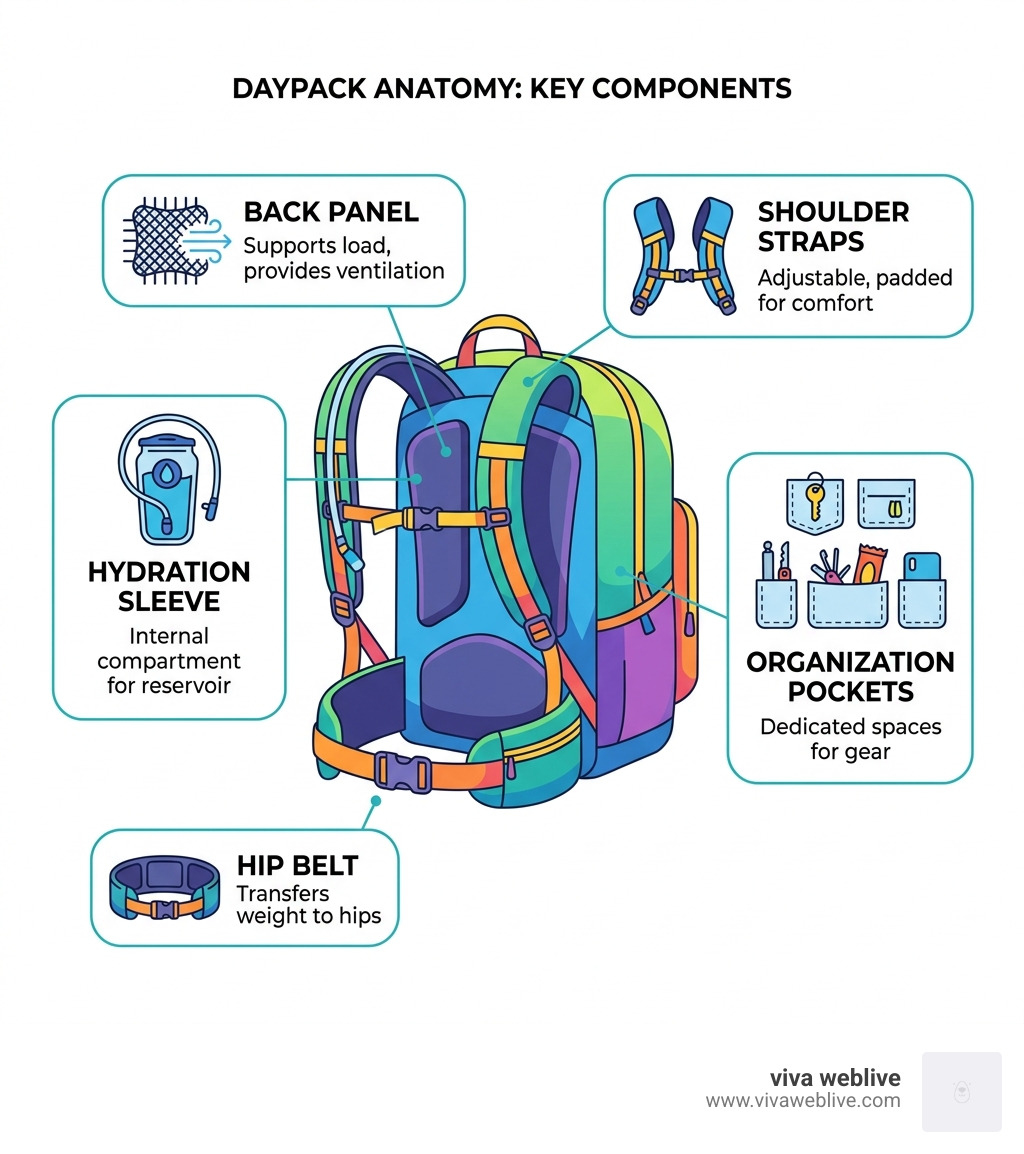
Choosing the Best Day Trip Backpack: Size and Capacity
When we talk about the best day trip backpack, the first question we always hear is: “How big should it be?” Capacity is measured in liters, and for day trips, you’ll typically see a range from 10L to 50L. Choosing the right one is a balancing act between having enough room for your “just in case” gear and not carrying a literal house on your back.
The Liters Breakdown
- 10L – 15L: These are minimalist packs. Think of them as “hydration plus.” They are perfect for a two-hour sunset hike or a quick bike ride where you only need water, a keys-and-phone pouch, and maybe a very light windbreaker.
- 20L – 30L: This is the “Goldilocks” zone. A 24L or 25L pack is often considered the best day trip backpack size because it fits the 10 essentials, a lunch, and an extra layer without feeling bulky.
- 35L – 50L: Now we’re talking about “big days.” If you’re hiking in winter and need to carry a heavy puffer jacket, or if you’re the “group hero” carrying everyone’s extra water and snacks, you’ll want this extra space.
Weight-to-Volume Ratio: The Efficiency Metric
One of the coolest stats we look at is the weight-to-volume ratio. It tells you how much the pack itself weighs compared to how much it can hold. For instance, the Venture Pal 35L is an efficiency beast. It weighs only 10.5 oz (298 g) but offers 35L of space. That’s a weight-per-liter of just 0.3 oz/L!
In contrast, a heavy-duty pack like the REI Co-op Traverse 35 weighs 52 oz for the same capacity. Why the difference? The Traverse offers massive comfort and support for heavy loads (scoring a 9.0 in construction quality), while the Venture Pal is all about being ultralight and packable.
| Activity Duration | Recommended Capacity | Gear Requirements |
|---|---|---|
| 1-3 Hours | 10L – 18L | Water, phone, light snack |
| Full Day (Summer) | 20L – 28L | Lunch, 2L water, rain shell, first aid |
| Full Day (Winter) | 30L – 40L | Puffer jacket, thermos, extra gloves/socks |
| Technical/Family | 35L+ | Climbing gear or extra supplies for kids |
Key Features for Comfort and Performance
A backpack is more than just a sack with straps. By April 2026, technology has advanced to the point where even budget packs have features that were once reserved for elite mountaineers.
Ventilation: Say Goodbye to “Sweaty Back”
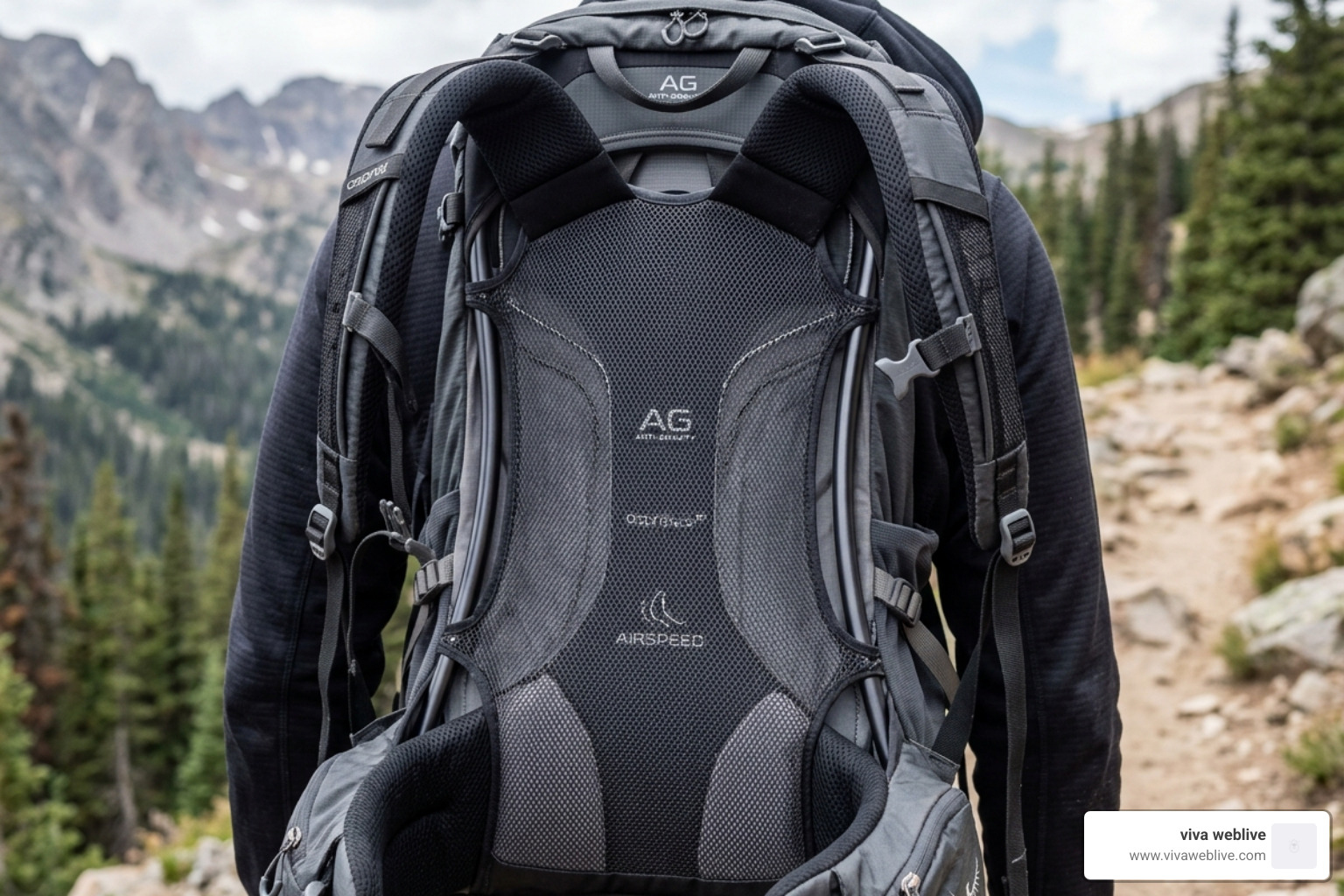
If you’ve ever finished a hike with a giant wet patch on your shirt, you know why ventilation matters. Look for trampoline-style back panels. These use a mesh screen to create a physical gap between your back and the pack.
- VaporSpan technology (found in Gregory packs) and AirScape suspension (Osprey) are industry leaders here.
- In our testing, the Gregory Zulu 24 LT earned a 9.0 comfort score largely because its back panel kept testers cool even during warm, sun-exposed climbs.
Hydration and Organization
Most modern daypacks are “hydration compatible,” meaning they have a sleeve for a water bladder and a port for the hose. Some, like Gregory, use SpeedClip connectors, though be warned: these are sometimes proprietary and work best with the same brand’s reservoir.
Don’t overlook the “Ease of Use” metrics. We love hip belt pockets for quick access to lip balm or a snack. Sternum straps are also vital; they keep the shoulder straps from sliding off your arms and help distribute the weight across your chest.
Durability
If you’re scrambling over rocks, you want a pack that won’t tear at the first sign of granite. Look for high denier (D) ratings. A 900 denier fabric is incredibly tough, while ultralight packs might use thinner ripstop nylon to save weight.
Finding the Perfect Fit: Torso and Gender-Specific Designs
You could buy the most expensive, top-rated pack in the world, but if it doesn’t fit your torso, it will be miserable.
Measuring Your Torso
Forget your height; it’s all about the length of your spine. To find your fit, measure from the C7 vertebra (the bony bump at the base of your neck) down to the top of your hip bones.
- If the pack is too long, you’ll see a gap between the shoulder straps and your shoulders.
- If it’s too short, the weight will pull down on your shoulders instead of resting on your hips.
Women’s-Specific vs. Unisex
Many brands offer “SL” (Slim Line) or women’s-specific fits. These often feature:
- S-curved shoulder straps to sit comfortably around the chest.
- Narrower frame widths.
- Shorter torso ranges (like the Deuter Trail 28 SL, which fits 15-19″ torsos).
However, our testers found that torso size is a much better indicator of fit than the gender label on the tag. Don’t be afraid to try a “men’s” pack if you have a long torso, or a “women’s” pack if you have a narrower frame.
A great place to test out a new fit is on a well-paved, accessible trail. For example, if you’re planning a Day Trip to Tokyo’s Mount Takao – Go Backpacking, a pack with a supportive hip belt will make the steady incline much more enjoyable.
Top-Rated Models for Every Adventure
After hiking hundreds of miles across rugged terrain and rolling paths, our team has narrowed down the field. Here is the breakdown of the top performers for 2026.
1. Gregory Zulu 24 LT (Best Overall)
This pack is essentially a high-end backpacking frame shrunk down into a daypack. It scored a 76/100 overall, with a near-perfect 9.0 for comfort.
- Pros: Incredible suspension, very breathable, carries up to 20 lbs with ease.
- Cons: At 1.53 oz/L, it’s heavier than minimalist options.
2. Osprey Sportlite 25 (Best Lightweight Performance)
Osprey is a legend for a reason. The Sportlite 25 rivals much more expensive packs in its design. It weighs 27.2 oz, giving it a Weight per Liter of 1.09 oz/L.
- Pros: Great balance of weight and features; very sleek.
- Cons: The back panel isn’t quite as ventilated as the “AirSpeed” models.
3. REI Co-op Flash 22 (Best Budget Lightweight)
This is an industry mainstay. Weighing only 17 oz (482 g), it’s a favorite for those who want to move fast. It achieved an overall score of 73/100.
- Pros: Very affordable (approx. $60), extremely light (0.77 oz/L).
- Cons: Minimal padding; you’ll feel sharp objects if you pack them poorly.
4. REI Co-op Traverse 35 (Best for Heavy Loads)
The highest scorer at 77/100. If you are carrying camera gear, toddler supplies, or winter kits, this is your pack.
- Pros: 9.0 score for both comfort and construction quality.
- Cons: It’s heavy (52 oz) and might be overkill for a casual stroll.
5. Cotopaxi Luzon 18L (Best for Travel)
Made from 100% repurposed fabrics, every Luzon is unique. It weighs only 10.6 oz.
- Pros: Colorful, eco-friendly, and stuffs easily into a larger suitcase.
- Cons: Frameless design means it lacks support for strenuous, all-day hikes.
Best Day Trip Backpack for Specific Activities
Not every hike is a trek through the wilderness. Sometimes the best day trip backpack is the one that can go from a mountain peak to a coffee shop.
Trail-to-Town Versatility
For those who want one bag for everything, the Osprey Talon 22 is a “jack-of-all-trades.” It’s rated 4.7/5 by users and is just as comfortable on a technical scramble as it is on a bike commute. It features a lid-lock for helmets and a blinker light attachment for urban safety.
Fast-Packing and Speed Hikes
If your idea of a good time is “mountain-eating speed,” look at the Black Diamond Distance 22. It uses a running-vest-inspired harness that hugs your body to prevent bouncing. At 14.1 oz, it’s built for the “fast and light” crowd.
Urban Exploration and Cultural Day Trips
If you’re heading somewhere like Japan, you might find yourself blending nature with culture. On a Mount Takao: An Easy Tokyo Day Trip in Search of Nature in Japan, you’ll encounter temples and even vending machines midway up the trail. For this, a pack like the REI Co-op Trail 25 is perfect—it has enough organization for your camera and snacks but doesn’t look like you’re about to summit Everest.
Sustainability Matters
In 2026, we are seeing more Bluesign-approved materials and PFC-free water-resistant coatings. Brands like Cotopaxi and REI are leading the charge by using recycled nylon and repurposed fabrics, ensuring that the gear we use to enjoy nature isn’t harming it.
Frequently Asked Questions about the Best Day Trip Backpack
What is the most comfortable daypack for long hikes in 2026?
The Gregory Zulu 24 LT currently holds the crown for comfort with a 9.0 score. Its VaporSpan backpanel creates a trampoline-like effect that keeps weight off your spine and allows air to flow freely. The supportive hip belts are also a game-changer for hikes longer than four hours.
How do I determine the right size for a day trip?
For most people, 20L to 25L is the sweet spot. It provides enough room for the “10 Essentials” plus lunch. However, if you are hiking in the winter, you’ll need closer to 35L to accommodate bulky layers. If you’re a minimalist doing a quick summer loop, an 18L pack like the Cotopaxi Luzon is plenty.
Are women’s-specific backpacks better than unisex models?
Not necessarily. While women’s-specific packs offer S-curved straps and shorter torso lengths, the best day trip backpack is the one that matches your specific measurements. We recommend prioritizing torso length and hip belt fit over the gender label. Always test the pack with weight in it to see if there are gaps at the shoulders or if the hip belt sits comfortably above your iliac crest.
Conclusion
At Viva WebLive, we believe that the right gear empowers you to explore more and worry less. Choosing the best day trip backpack is an investment in your comfort and your health. Whether you choose the ultralight efficiency of the REI Co-op Flash 22 or the rugged support of the REI Co-op Traverse 35, make sure to measure your torso and consider your typical gear load.
Once you’ve found your pack, remember to maintain it! Rinse off salt from sweat and dirt from the trail to keep the zippers and fabrics in top shape for years to come.
Ready to gear up for your next adventure? Explore more travel advice at Viva WebLive to find the latest tips on safety, packing, and exploration. Travel smart, gear up, and we’ll see you on the trail!
